
Your visit
Discover how our organic Vosges candies are traditionally handcrafted
Follow the steps of the candy-making process and enjoy!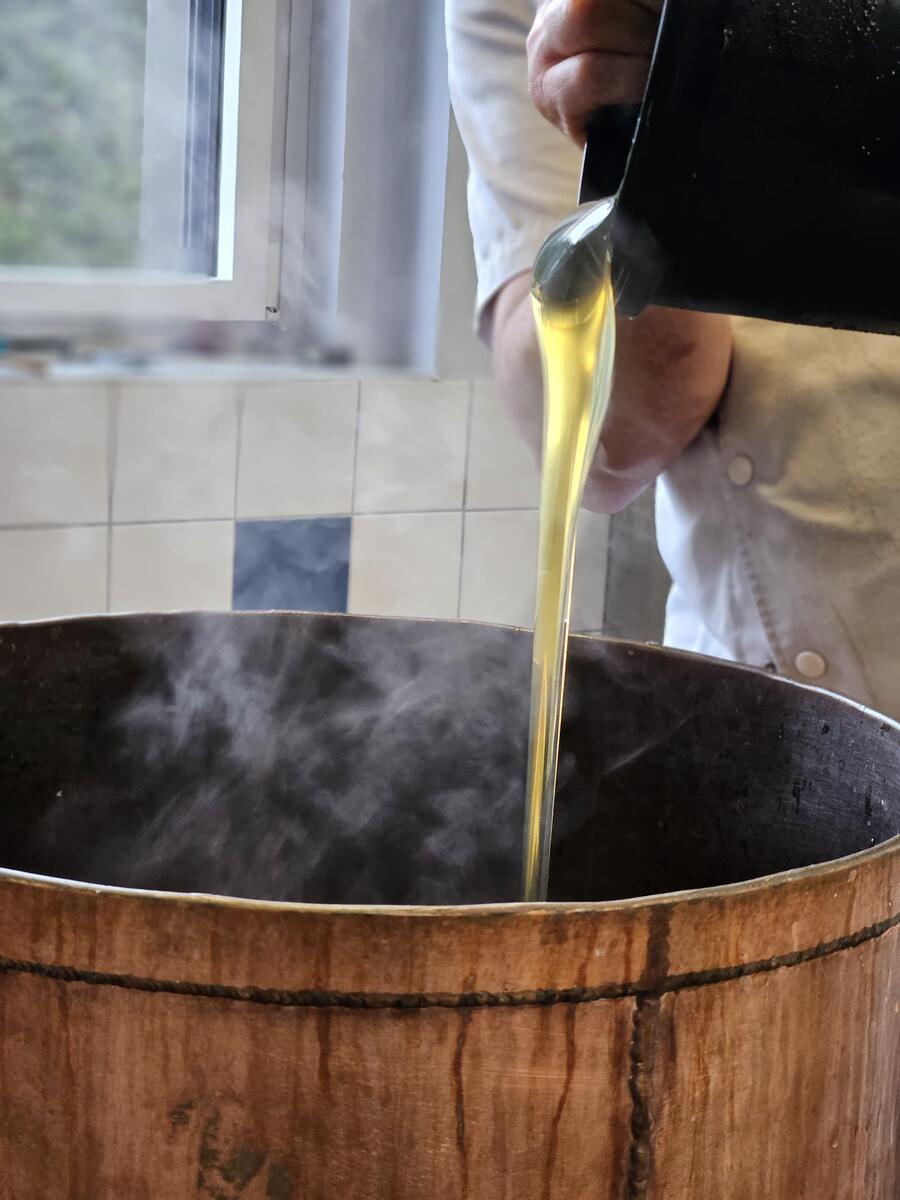
Welcome
to the Confiserie Géromoise!
Here, every candy is made with passion in our workshop in Gérardmer, in the heart of the Vosges.
Each day, our artisan confectioner and his team make organic Vosges candies and handcrafted sweets, following traditional methods and old-fashioned recipes. The sugar is cooked in a copper kettle, just like in the past, to preserve an authentic know-how.
Through this guide, discover the secrets behind our candy-making process and take a little piece of the Vosges mountains with you in your pocket.
The candy-making process
Cooking the sugar
The sugar is heated to 150°C
The process begins in a copper kettle, just like in the old days.
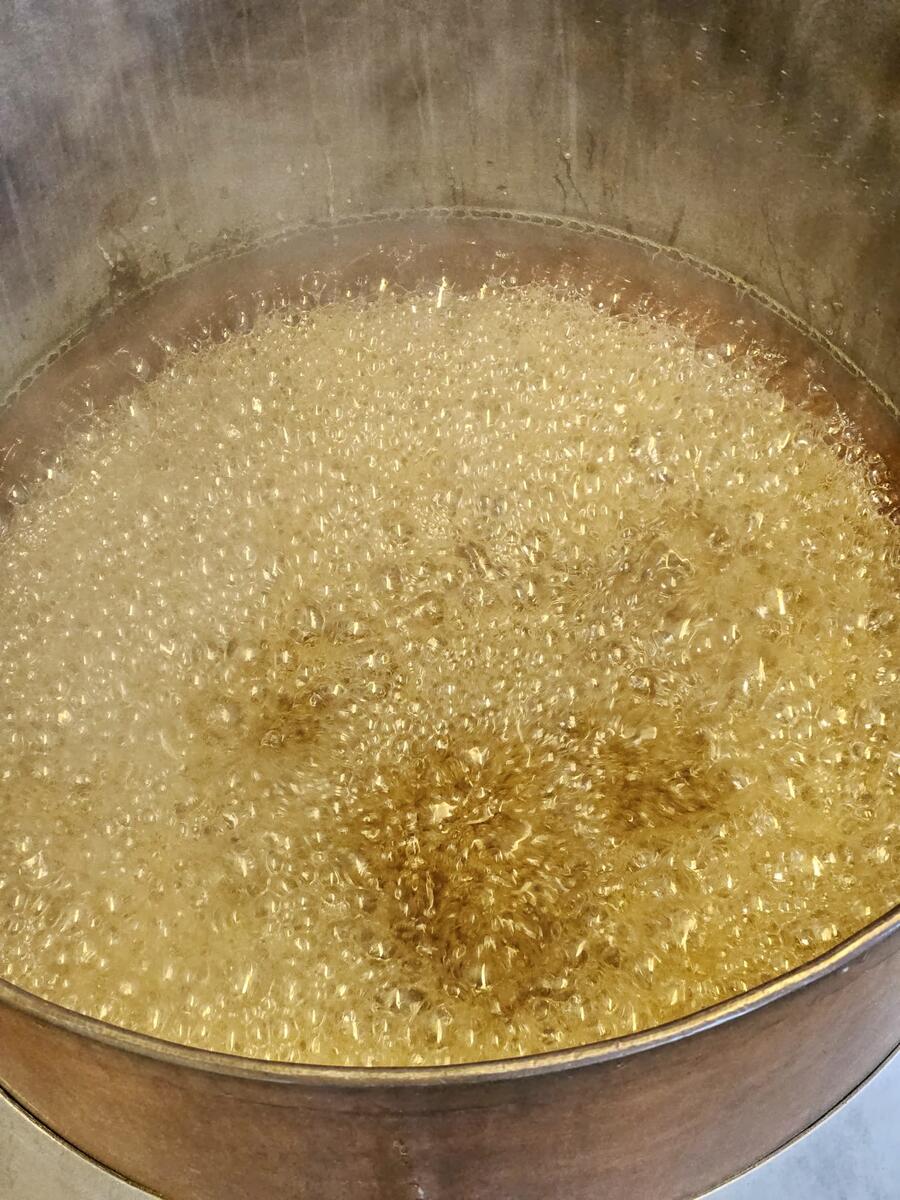
The sugar is mixed with water and glucose, then gradually heated until it reaches 150°C. At this temperature, the water evaporates and the mixture becomes thick and concentrated.
We only use organic sugars made from French beet sugar and cane sugar.
This step requires great precision: just a few degrees can affect how well the candy keeps.
This is where the transformation begins.
Copper is used because it distributes heat evenly. This allows the sugar to cook more precisely and consistently.
Making the candy on the table
Handling a 10 Kg candy mass
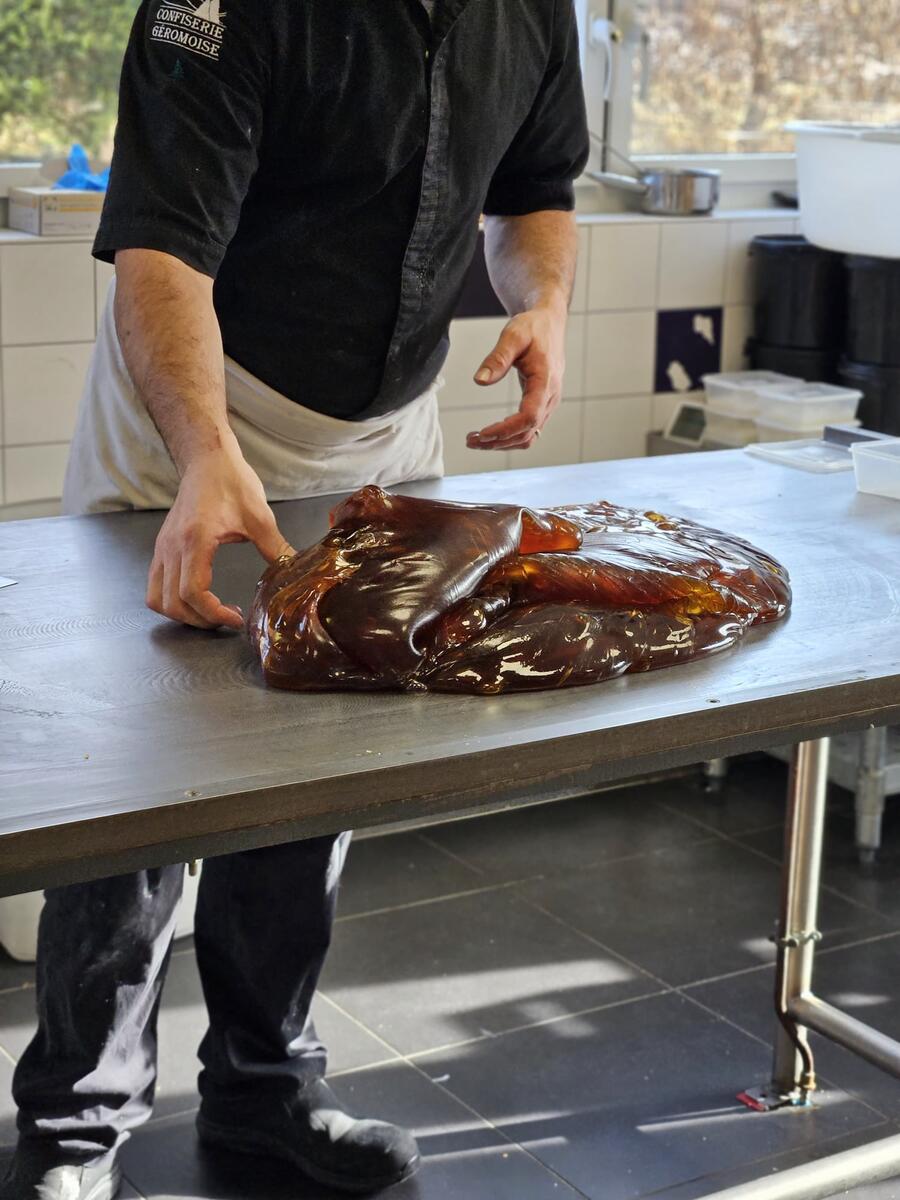
In the basin, everything speeds up. The confectioner adds the essential oils and mixes quickly: the aromas are released immediately. Without waiting, the hot candy mass is poured onto the cold table. The thermal shock begins to work: the texture already starts to change.
The confectioner works it by hand, pulling it, folding it and moving it around. In just a few moments, it becomes firmer, glossy, almost like molten glass. The candy mass then forms one large piece of about 10 kilos.
It is cut into several smaller pieces, ready for the next stage of its transformation.
Our honey candies are made with PDO Vosges mountain honey from our own beehives.
Shaping the candies
6 000 candies formed in just a few seconds
Before the candy mass goes into the machine, the confectioner prepares the smaller pieces. Using a brush, he applies a thin layer of coconut oil to prevent the candy from sticking inside the bronze mould. It is a natural choice: unlike some industrial producers who use petroleum-based Vaseline, we prefer simple solutions that respect our product.
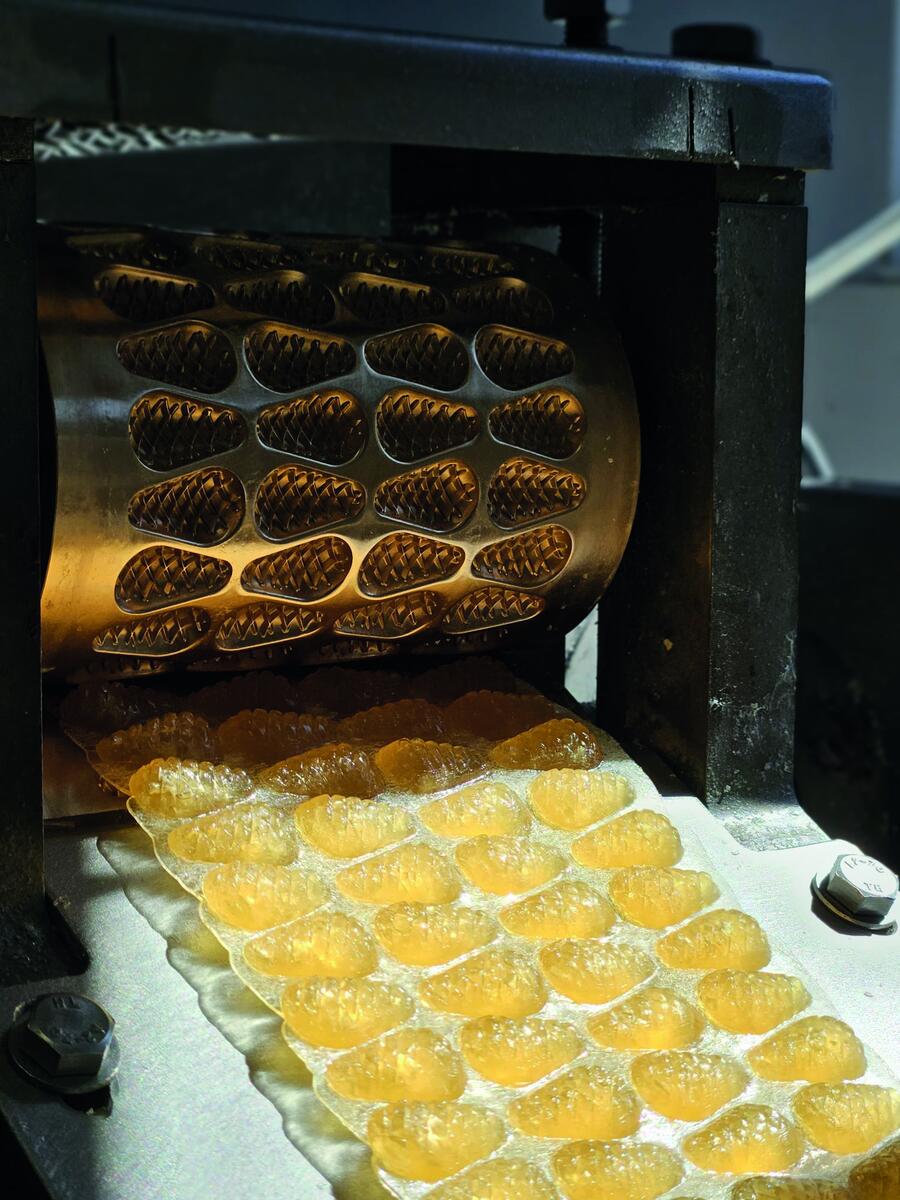
The pieces are then placed into the bronze mould. In just a few seconds, the candy mass is stretched, pressed and transformed.
Around 6,000 candies are shaped from each batch.
To change the shape, all we have to do is replace the bronze part.
Bronze is used because it is strong and highly heat-resistant. It helps create precise, consistent shapes.
Cooling on a ventilated conveyor belt
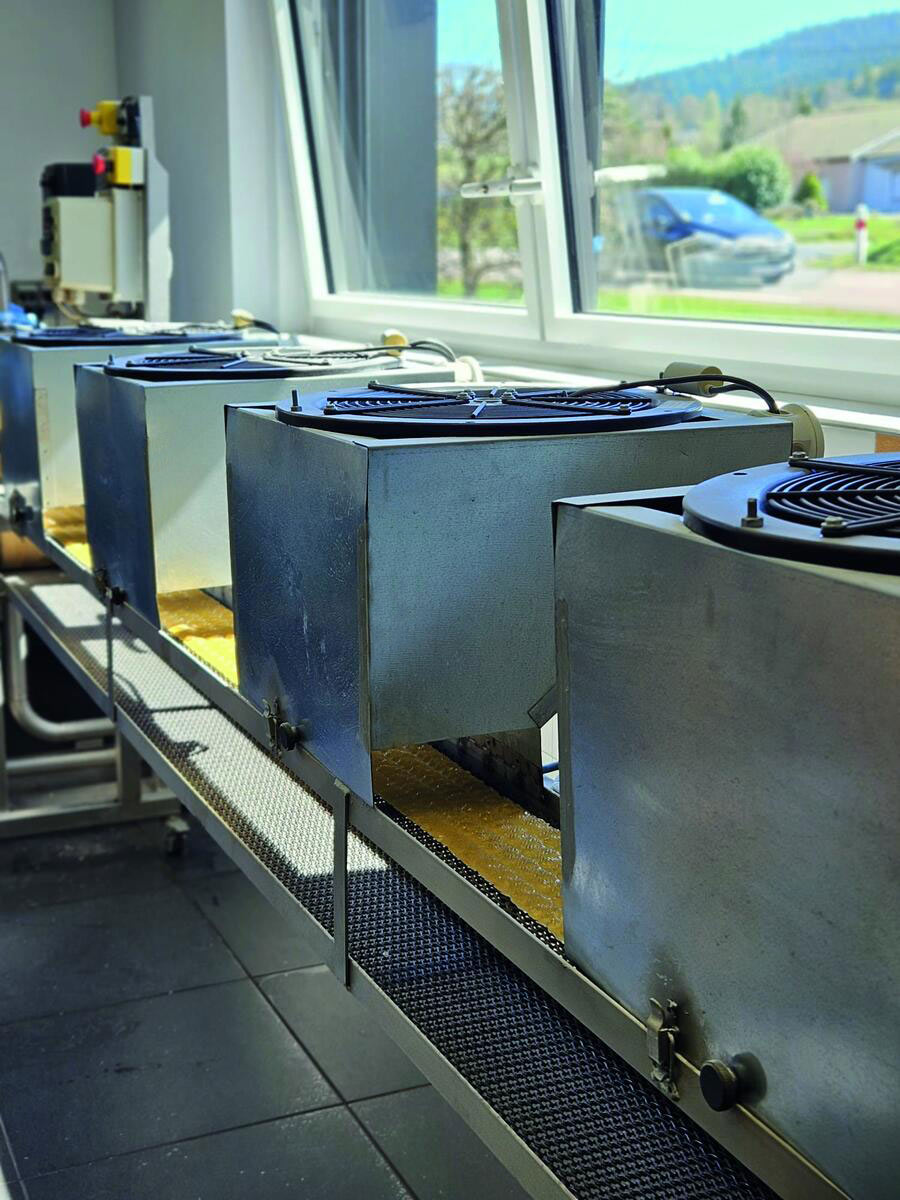
8 fans to cool the candies
The candies move along a ventilated conveyor belt, still slightly attached to one another by a thin layer of sugar. They pass under a series of 8 fans that continuously blow cold air over them. Then, they fall into a container. This is the exact moment when they separate from one another.
The confectioner then shakes the container to collect the small broken pieces. These are either reused in the production process, mixed in with the essential oils during step 2, or turned into tasty treats to enjoy.
In our confectionery, nothing is wasted: everything is transformed!
Candy pieces can be enjoyed in tea, mixed into hot water to create a warm candy-flavoured drink, added to yoghurt, or even used in homemade desserts.
Coating the candies
1 spoonful of syrup keeps the candies from sticking
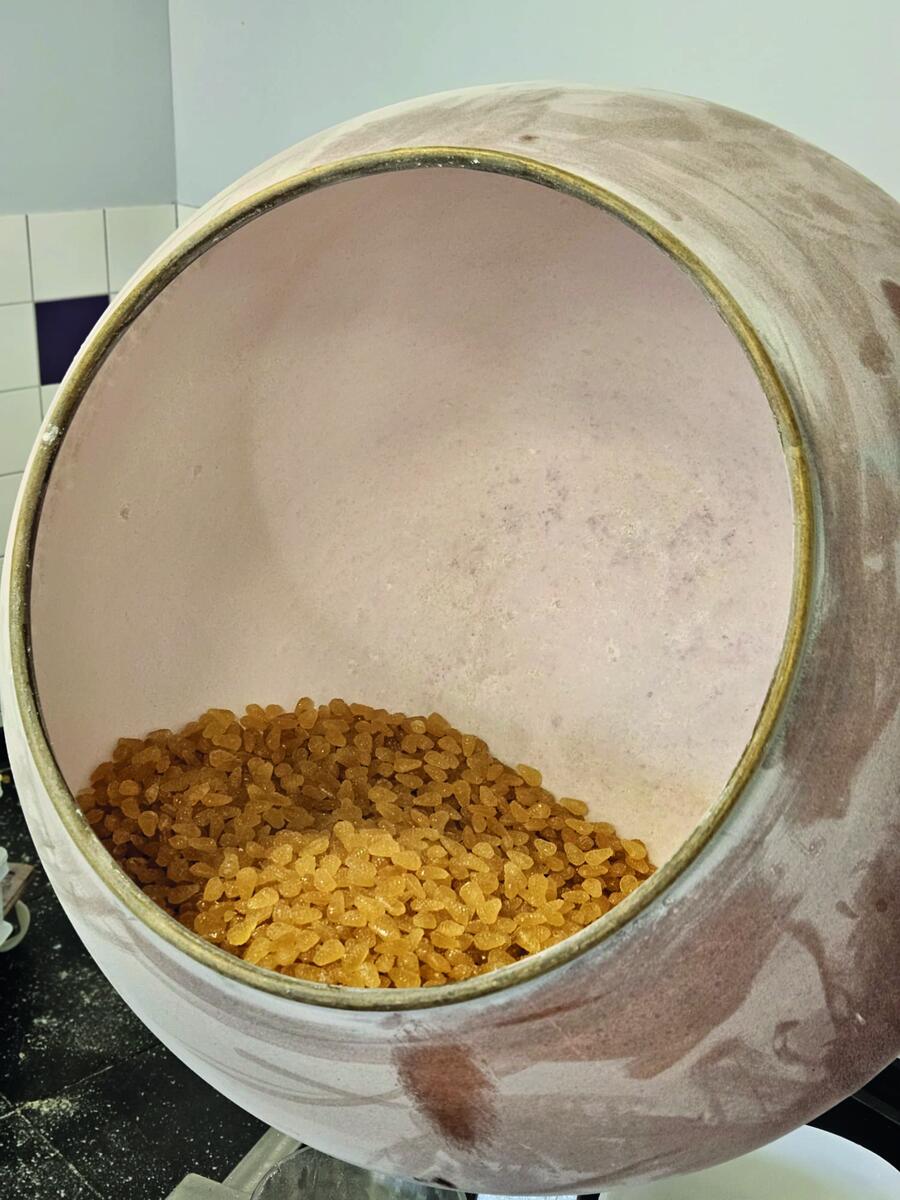
The candies are poured into a rotating drum. They keep turning continuously while still warm.
The confectioner adds a small amount of syrup, made with 50% water and 50% sugar. This thin coating helps prevent the candies from sticking to one another.
But precision is essential: if too much syrup is added, the candies may start sticking again.
The confectioner’s gesture makes all the difference.
And now… it is time for the tasting!
The coating protects the candies and helps preserve their texture and flavour for longer.
FAQ
Your questions, our answers
Are all the sweets you sell made here?
Yes, all our confectionery is made in our workshop in Gérardmer. We only sell what we make ourselves.
Are the candies suitable for people with dietary restrictions?
Our candies are gluten-free, with no artificial flavouring, no artificial colouring and no animal gelatine.
What do you use to colour the candies?
The colours come from natural fruit or vegetable extracts. For example, red comes from beetroot, and green from matcha tea extract. We do not use artificial colouring.
Can children eat the candies?
For children under 5, we recommend our Noursons instead. They are made with agar-agar, a natural gelling agent derived from red algae.
Where do the essential oils come from?
Our essential oils come from La Ferme du Bien-Être, located just 200 metres from the confectionery.
Can I order your candies online?
Yes, you can order from our online shop: boutique.vosges-essentia.fr. Delivery is available in France and Belgium.
How long can the products be kept?
Hard candies can be kept for 18 months, candy pieces for 12 months, lollipops and gummies for 10 months, and chocolate-coated products, almonds, peanuts and Noursons for 8 months.
Do you offer personalised products for events?
Yes, we offer personalised tins for weddings, companies and events. The price is €2 excluding VAT per tin, with a minimum order of 100 tins. Graphic design is included. Contact us at comm@confiserie-geromoise.fr.
Take a little piece of the Vosges mountains with you in your pocket.
Our story — a family project
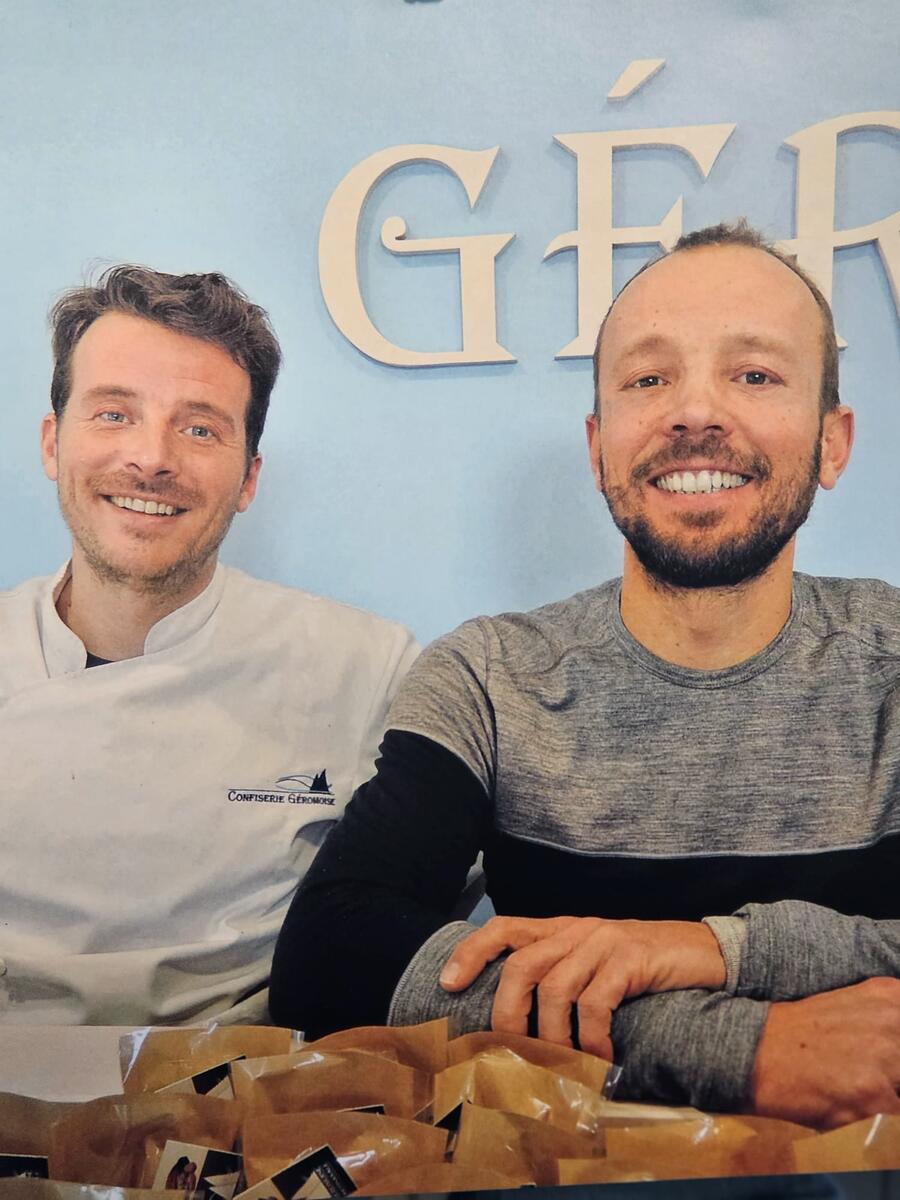
It all began with Justin Wexler, who dreamed from the age of 12 of one day opening a confectionery in Gérardmer. Trained at Gilg in Munster, one of Alsace’s leading pastry shops, he holds a BTM qualification in pastry, chocolate and confectionery, and has won several competitions. At just 23, he opened his own pastry shop in Saint-Dié-des-Vosges. Seven years later, he sold it to make his childhood dream come true.
His brother Manuel, passionate about IT for over twenty years, also left his career and the city behind to return to the Valley of Lakes.
Together, they turned this dream into a family-run, artisan confectionery deeply rooted in the Vosges.
Agriculture biologique
Boutique en ligne
Nos douceurs bio livrées chez vous
Tous nos bonbons des Vosges, gommes, pastilles et chocolats artisanaux, livrée en France et en Europe.
Découvrir notre boutique en ligne

Faites vous livrer nos douceurs : Et retrouvez la montagne vosgienne dans votre boite aux lettres ! Notre boutique en ligne
Nous nous ferons un plaisir de faire voyager nos confiseries des Hautes-Vosges jusqu'à vous.
